

Laser REMOVAL
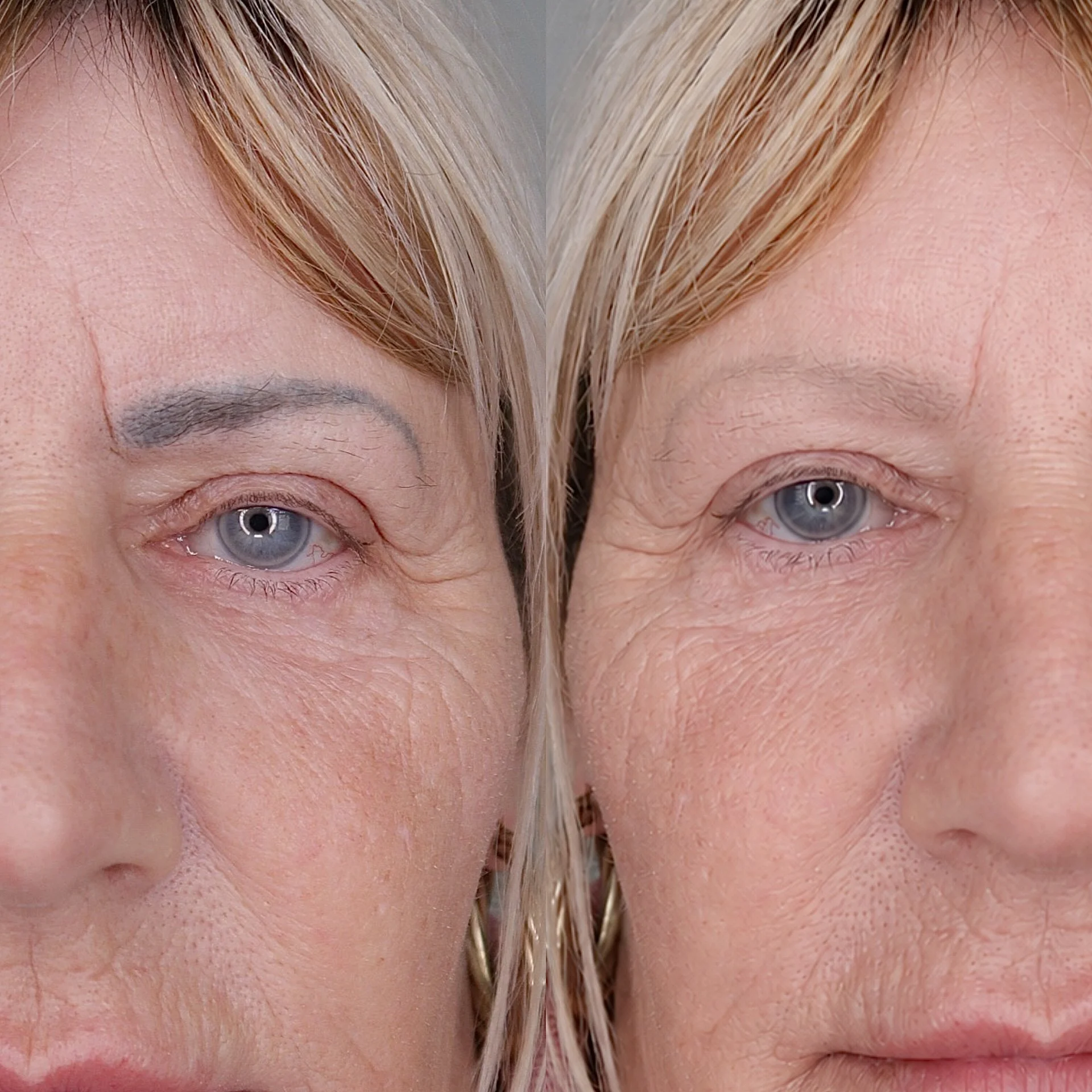
Laser tattoo removal uses targeted light energy to break down tattoo pigment in the skin. The laser shatters the ink into tiny particles, which are then naturally processed and eliminated by the body’s lymphatic system. Most brow removals require fewer than three sessions to achieve effective clearance.
Patch Test: Mandatory
Session Duration: 15 minutes
Time Between Sessions: 6 weeks
Healing Time: 7–14 days
Glycolic REMOVAL
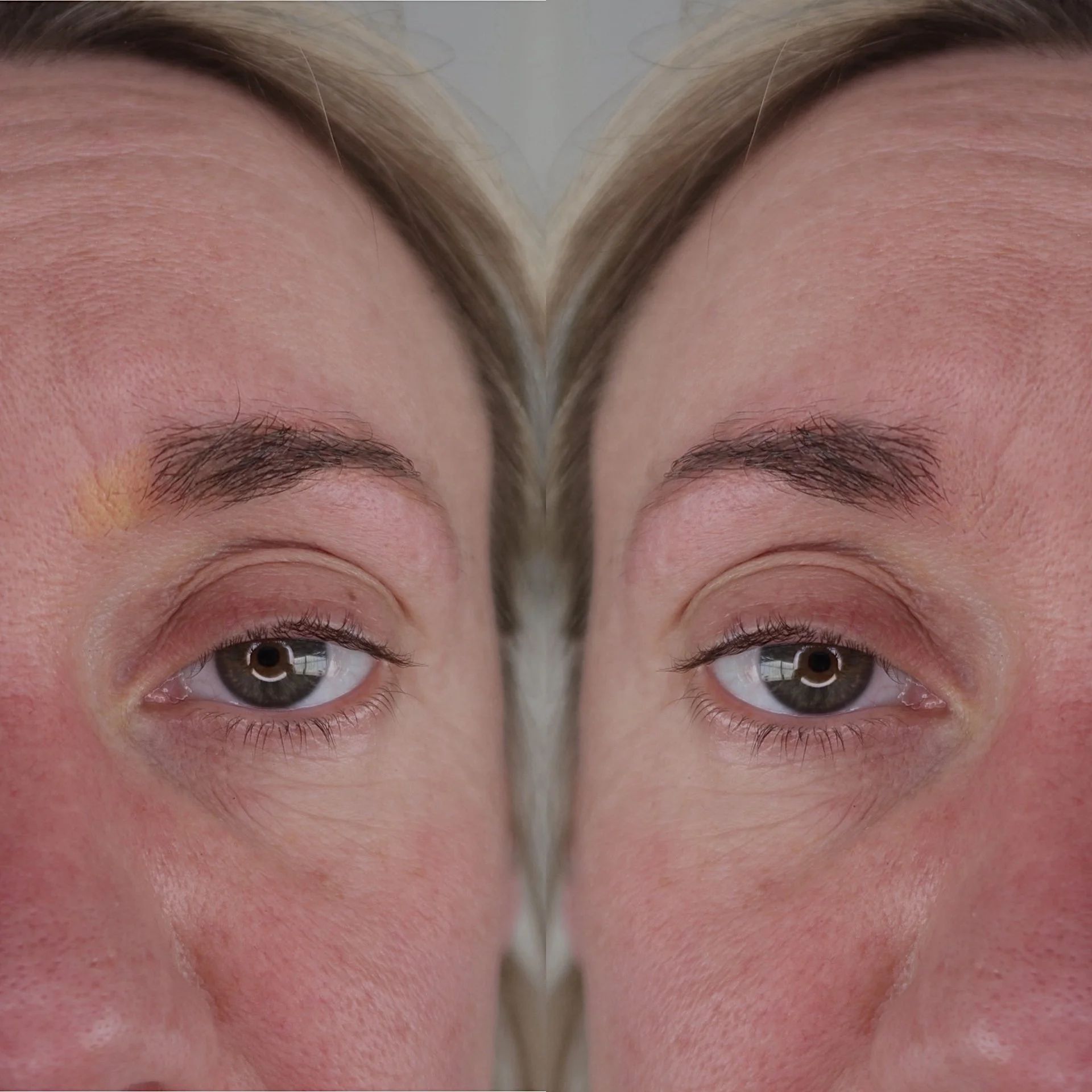
Glycolic tattoo removal uses glycolic acid to break down pigment in the skin. The solution is implanted into the treated area, where it helps lift and lighten the ink so it gradually rises to the surface and fades over time.
This method is only offered for clients with residual yellow pigment that can sometimes remain after laser removal.
Patch Test: Not Required
Session Duration: 1 hour
Time Between Sessions: 8 weeks
Healing Time: 7–14 days
-
Most clients describe the sensation as similar to an elastic band snapping against the skin. Discomfort is temporary and treatments are quick.
-
This varies depending on pigment, colour, depth, and skin type. Cosmetic brow tattoos typically require a series of treatments, often fewer than traditional body tattoos.
-
When it comes to eyebrow pigments, they’re typically made by combining the three primary colors: red, blue, and yellow. These colors are mixed in different ratios to create various shades of brown. Here’s why yellow pigment can stick around after laser removal:
Blue and Black Pigments: These pigments are very responsive to the laser, especially at 1064 nm, which targets darker colors like blue and black. As a result, these pigments break down and fade first.
Red Pigments: The 532 nm wavelength targets red pigments, but they can take longer to fade depending on the pigment's specific makeup.
Yellow Pigments: Yellow pigment is tricky. It reflects most laser light instead of absorbing it. Because of this, yellow pigment doesn’t break down as easily, making it the most resistant to removal.
As the darker colors (blue and red) are removed or lightened, the yellow pigment often remains, leading to a yellow or orange tint. The degree to which this occurs depends largely on the original pigment formulation. If the initial pigment mix contains a higher concentration of yellow, more yellow is likely to remain visible as the other colors fade. Conversely, if the yellow component was minimal in the original mix, the leftover yellow tint will be less noticeable.
Why is Yellow So Resistant to Removal?
Low Absorption: Yellow pigments don’t absorb laser energy well because they reflect light. This means the laser can’t break them down effectively.
Wavelength Issues: Lasers typically use wavelengths like 1064 nm for darker pigments or 532 nm for red tones. Unfortunately, there isn’t a wavelength specifically for yellow pigments, which makes them harder to target.
Chemical Composition: Yellow pigments often contain materials like titanium dioxide or iron oxide. These can undergo changes like oxidation when exposed to laser energy, which alters the pigment but doesn’t completely remove it.
For these reasons, yellow pigments may require more laser sessions or other methods, like saline removal, to get better results.
-
In many cases, yes. However, results depend on the pigment used, how deep it was implanted, and how the skin responds to treatment.
-
Immediately after treatment, the brows may appear lighter or slightly faded, with possible redness, swelling, or a mild “frosted” effect on the skin. This is temporary and usually settles within a few hours to a few days
-
If you already have permanent makeup, I will need to assess the level of pigment currently in the skin to determine whether it's ethical to work over it. The skin functions like a sponge, and when it holds too much pigment, there isn’t enough room to implant more. In such cases, removal is necessary before adding more pigment, as working over saturated skin leads to unsatisfactory results.