Why does healed permanent make-up look softer than fresh results?
The final result of permanent makeup heals lighter or “softer” due to several factors: as the skin repairs itself, a new layer of skin forms over the pigment, softening its appearance; some pigment is naturally lost through lymphatic fluid and flaking during the healing process; the bodys immune response may metabolise or push out a small amount of pigment; and oxidation, combined with the influence of individual skin undertones and oil levels, further contributes to the pigment appearing softer and more muted.
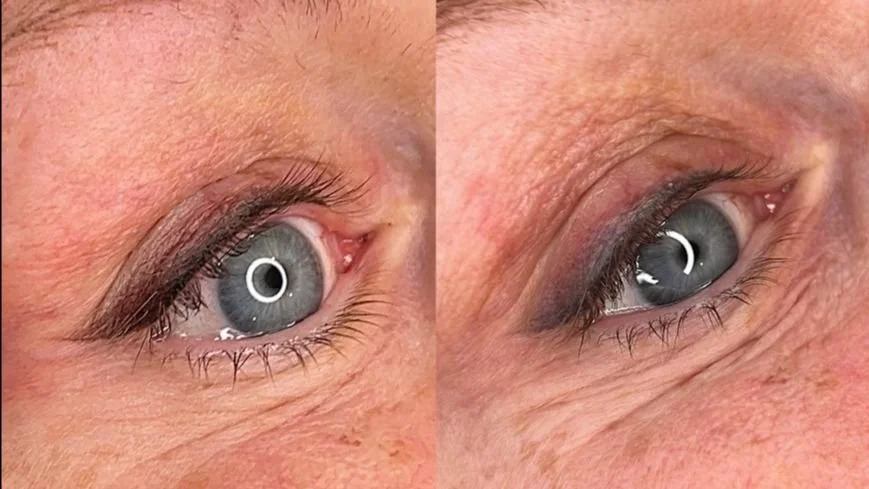
Understanding this process helps set realistic expectations, so you can love your results at every stage! Here’s a healed smoky liner I did recently—on the left, you can see the immediate result, and on the right, the beautifully healed outcome after six weeks.
Achieving beautifully healed results isn’t just about the initial procedure—it’s about how you care for your skin in the long run. Here’s why each step matters:
Avoid Direct Sun Exposure – UV rays can cause premature fading and discoloration of your permanent makeup. Always wear SPF and avoid prolonged sun exposure to keep your results crisp and true to color.
Keep Skin Hydrated – Healthy, moisturized skin retains pigment better. Drink plenty of water and use a gentle, nourishing moisturizer to maintain optimal skin health.
Avoid Harsh Skincare – Active ingredients like retinol, glycolic acid, and strong exfoliants can break down pigment over time. Be mindful of your skincare routine to preserve your results.
Yearly Touch-Ups – Over time, pigment naturally fades. Annual touch-ups help maintain the shape, depth, and color, ensuring your permanent makeup stays fresh and flawless.
By following these simple steps, you can enjoy long-lasting, beautiful results!